
Warehouse operations have become one of the biggest drivers of business performance for pharmaceutical and healthcare organisations across the UK. Yet many businesses still rely on disconnected systems, spreadsheets and manual processes that create inventory errors, slow order fulfilment and increase compliance risks.
Investing in Warehouse Management System Development is no longer just about replacing outdated software. It is about building a solution that reflects your warehouse processes, supports regulatory requirements and connects inventory, purchasing, finance and logistics through one platform.
In this guide, we'll explain when businesses should consider Warehouse Management Software Development, the essential capabilities of a modern solution and why many organisations are choosing a Warehouse Management System Development Company to build software that supports long-term growth.
Why Traditional Warehouse Systems Are No Longer Enough
Many warehouse systems were implemented years ago when operational requirements were far simpler.
Businesses managed fewer SKUs.
Orders were processed manually.
Customers accepted longer delivery times.
Regulatory requirements were less demanding.
Today, the reality is very different.
Warehouse teams are expected to process more orders, maintain near-perfect inventory accuracy and provide real-time information to multiple departments simultaneously. At the same time, pharmaceutical businesses must comply with strict regulatory standards while maintaining complete traceability for every product moving through the warehouse.
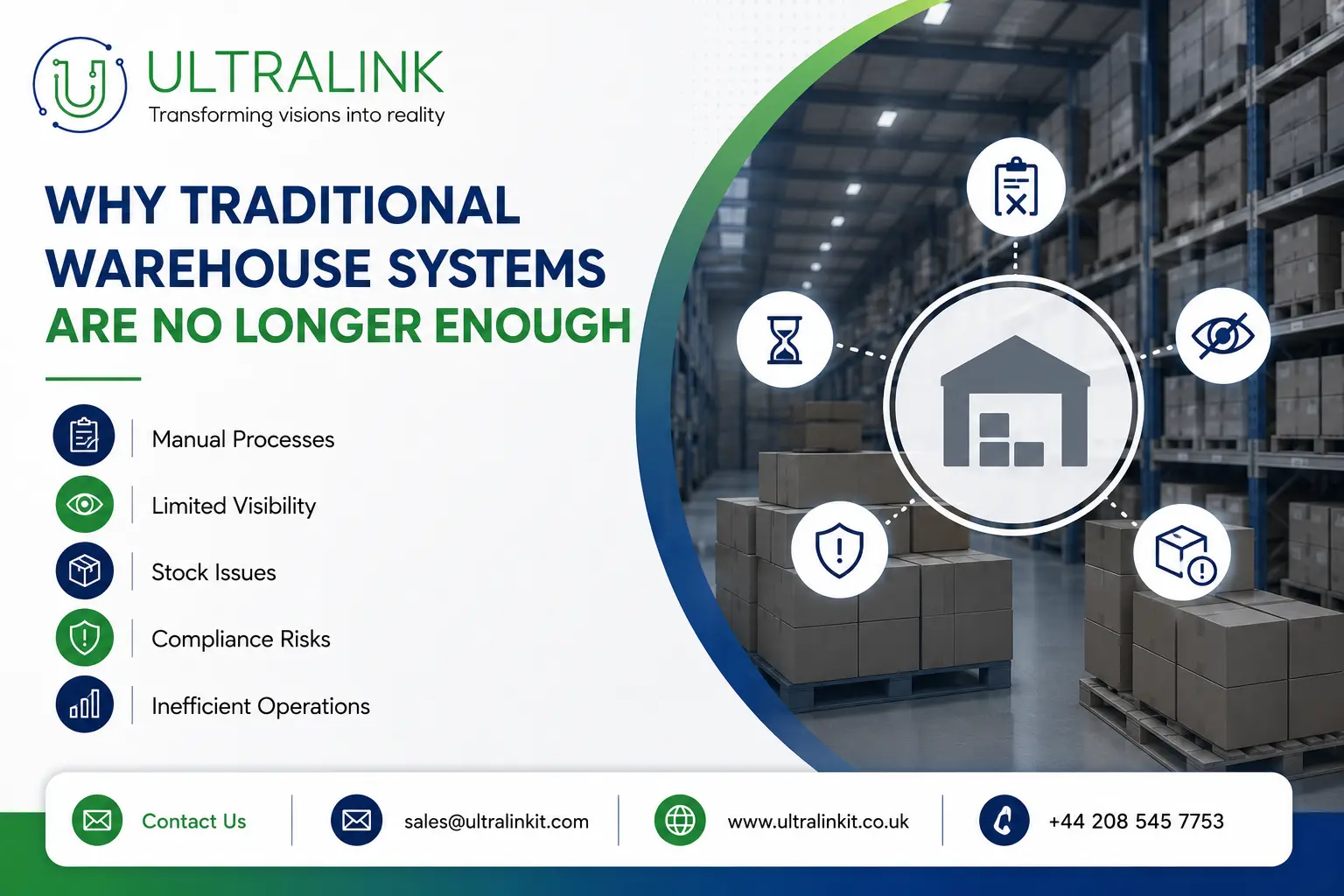
Unfortunately, many organisations still operate with:
- Paper-based warehouse processes
- Excel spreadsheets for stock management
- Manual inventory reconciliation
- Standalone barcode systems
- Legacy ERP software
- Disconnected warehouse applications
- Duplicate data entry between departments
Each system may perform its individual task, but together they create operational bottlenecks.
Warehouse staff spend valuable time searching for information rather than moving inventory.
Finance teams struggle with stock discrepancies.
Customer service teams cannot confidently answer inventory enquiries.
Management lacks accurate reporting for strategic decisions.
These challenges rarely appear overnight. Instead, they develop gradually as businesses grow, making them difficult to recognise until operational performance begins to decline.
Many organisations initially believe they have a staffing problem.
In reality, they often have a systems problem.
When Does a Business Need Custom Warehouse Management System Development?
Not every organisation requires a custom-built solution.
For smaller businesses with straightforward warehouse operations, an off-the-shelf application may be sufficient.
However, as operations become more complex, standard software often reaches its limitations.
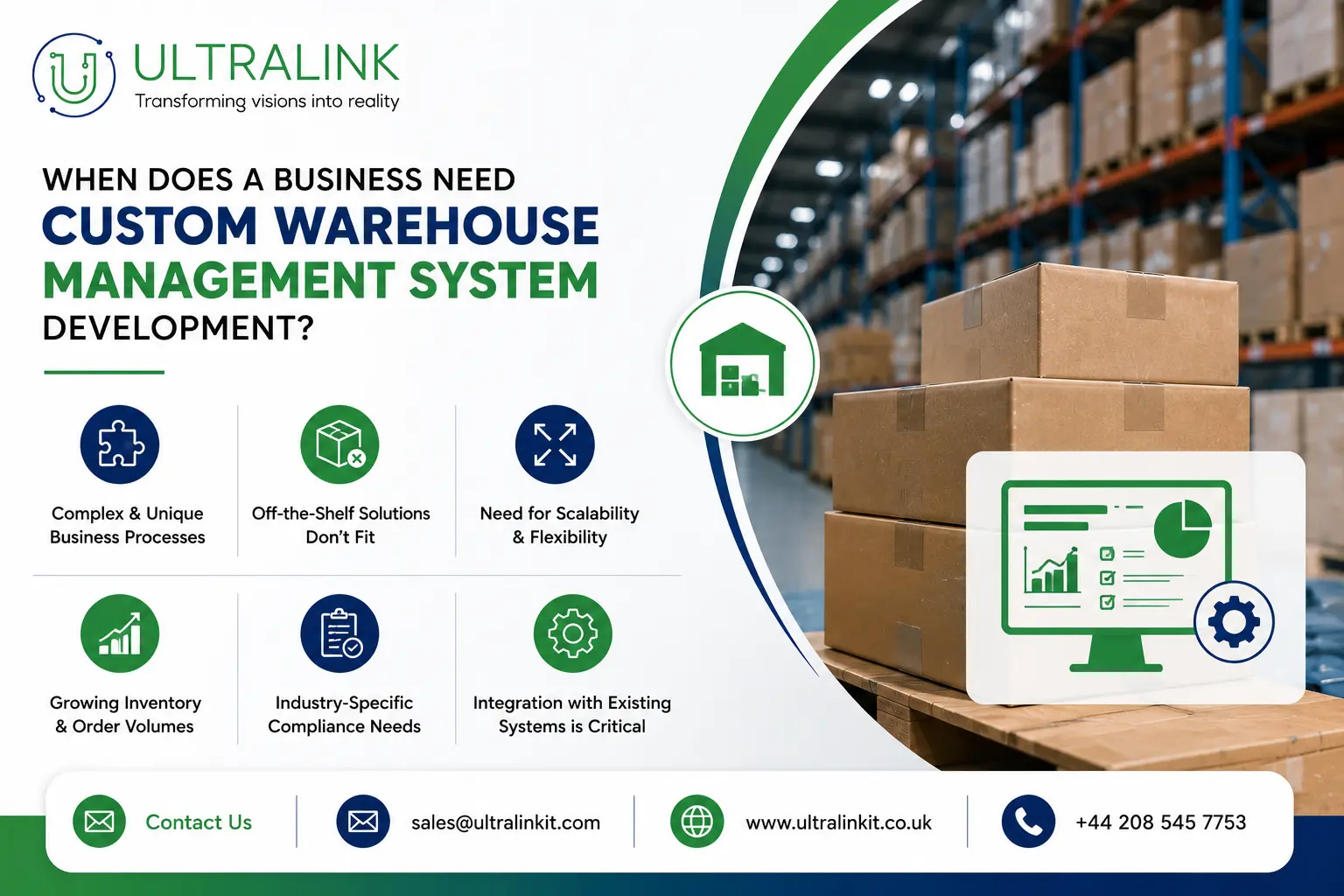
A custom Warehouse Management System UK solution becomes valuable when businesses need software that reflects the way they actually work rather than forcing teams to adapt to rigid processes.
Some common indicators include:
Inventory Accuracy Continues to Decline
If warehouse teams frequently discover stock discrepancies, misplaced products or incorrect inventory counts, the issue is rarely employee performance alone.
Without real-time inventory visibility, every manual adjustment increases the likelihood of future errors.
Multiple Systems Are Used for One Process
A typical warehouse may use:
- ERP software
- Excel spreadsheets
- Courier portals
- Barcode software
- Paper checklists
Every additional system increases administration and introduces opportunities for human error.
Warehouse Teams Spend More Time Updating Data Than Moving Stock
One of the biggest warning signs is when employees spend significant time entering the same information into multiple systems.
Duplicate data entry slows operations and creates inconsistencies between departments.
Compliance Requirements Continue to Increase
For pharmaceutical and healthcare organisations, warehouse operations must support much more than inventory management.
Products require:
- Batch traceability
- Expiry tracking
- Complete audit history
- Accurate stock movements
- Secure user permissions
- Electronic records
These requirements are difficult to manage consistently using manual processes.
Business Growth Is Slowing Operations
Growth should improve profitability.
Instead, many businesses find that increasing order volumes expose weaknesses within existing warehouse processes.
More customers.
More inventory.
More warehouse staff.
More manual work.
Without automation, operational complexity grows faster than revenue.
Planning a Successful Warehouse Management System Development Project
One of the biggest misconceptions surrounding Warehouse Management Software Development is that success depends primarily on technology.
In reality, successful projects begin long before software development starts.
The first objective should never be selecting features.
Instead, organisations should understand how work actually flows through the warehouse.
Every warehouse has its own operational model.
Some focus on pharmaceutical distribution.
Others manage temperature-controlled inventory.
Some operate multiple warehouse locations.
Others process thousands of small customer orders every day.
Attempting to apply identical software across every environment often leads to poor adoption and unnecessary workarounds.
A successful project begins by answering practical operational questions.
- How are goods received?
- How are products verified?
- Where are delays occurring?
- Which activities are still manual?
- Which reports do managers actually need?
- How are exceptions currently handled?
- Which processes create the highest operational risk?
Only after understanding these workflows should software requirements be defined.
This approach ensures the finished solution supports business operations rather than forcing employees to change proven processes unnecessarily.
The Essential Capabilities of a Modern Warehouse Management System
Technology should simplify warehouse operations, not make them more complicated.
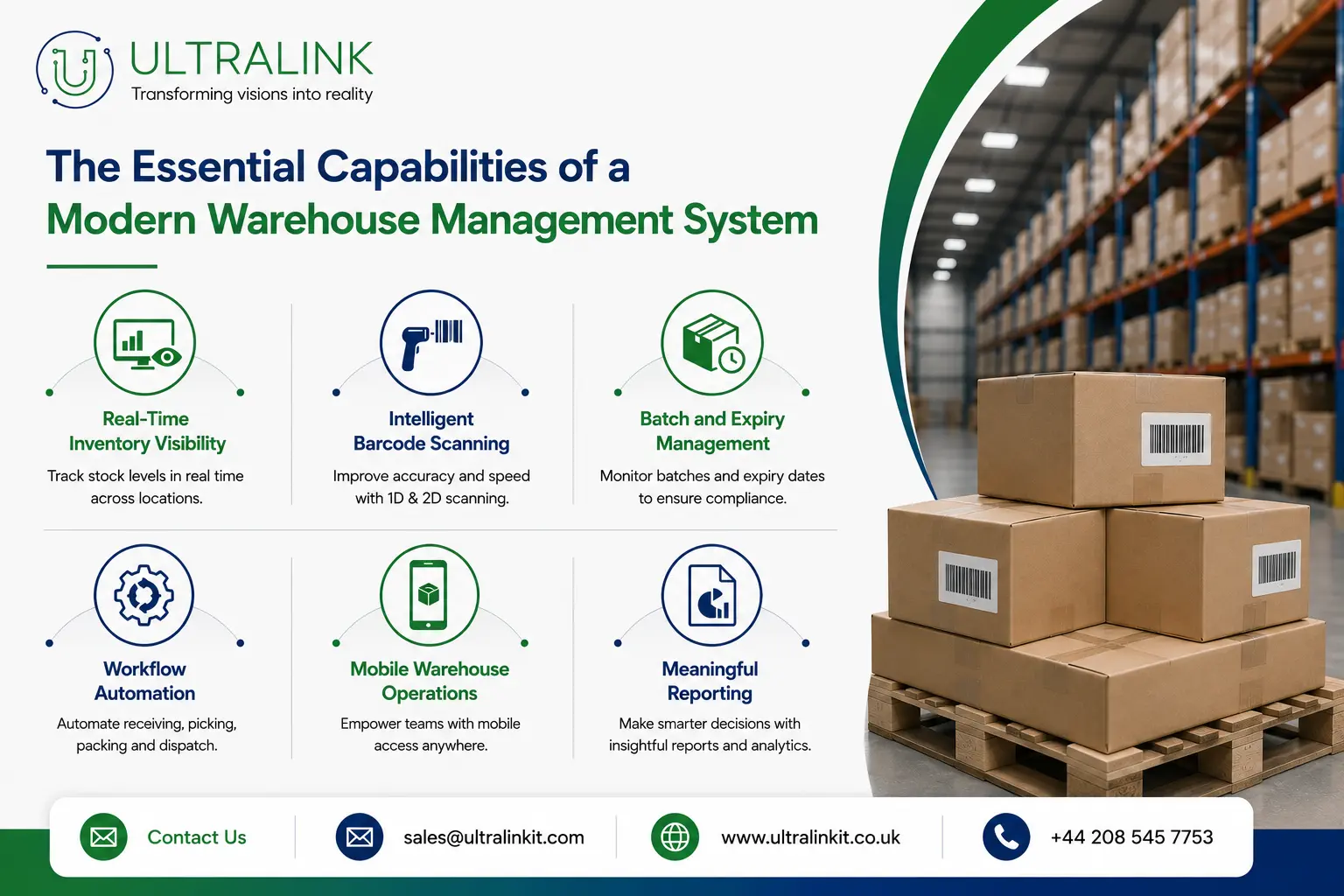
A modern Warehouse Management System Development project should focus on improving visibility, reducing manual effort and creating a connected operational environment.
Rather than evaluating software based on the number of available features, organisations should consider how each capability contributes to measurable business outcomes.
Real-Time Inventory Visibility
Inventory decisions should never rely on yesterday's reports.
Warehouse managers need immediate visibility into:
- Current stock levels
- Product locations
- Reserved inventory
- Incoming deliveries
- Available quantities
Live inventory data enables faster decision-making while reducing unnecessary stock movements and emergency purchasing.
Intelligent Barcode Scanning
Barcode technology has evolved far beyond simple stock identification.
Integrated 1D and 2D barcode scanning supports:
- Goods receiving
- Put-away
- Picking
- Packing
- Dispatch
- Returns processing
- Inventory verification
Each scan replaces manual data entry with accurate, real-time information, helping warehouse teams work faster while reducing costly mistakes.
Batch and Expiry Management
For organisations involved in Pharmaceutical Warehouse Management, maintaining product traceability is essential.
Every stock movement should capture critical information, including:
- Batch number
- Expiry date
- Storage location
- Movement history
- User activity
This level of visibility not only supports regulatory compliance but also enables faster product recalls, improved stock rotation and reduced product wastage.
Workflow Automation
Routine warehouse activities should not depend on paper forms or manual approval processes.
Automation allows organisations to standardise tasks such as:
- Goods receiving
- Stock allocation
- Replenishment
- Picking
- Packing
- Dispatch
- Returns
- Claims processing
As a result, warehouse teams spend less time managing administration and more time focusing on operational efficiency.
Mobile Warehouse Operations
Modern warehouse staff rarely work from a desk.
Mobile devices allow employees to access live information directly from warehouse aisles, improving productivity while reducing unnecessary travel throughout the facility.
Whether verifying stock, confirming deliveries or completing cycle counts, mobile access ensures decisions are based on accurate information at the point of activity.
Meaningful Reporting
Warehouse reporting should support decision-making rather than simply recording historical activity.
Effective dashboards provide visibility into:
- Inventory accuracy
- Picking performance
- Order fulfilment
- Warehouse productivity
- Operational bottlenecks
- Stock ageing
- Exception reporting
These insights enable managers to identify trends early and make informed operational improvements before small issues become costly business problems.
Integrations That Deliver the Greatest Business Value

A Warehouse Management System should never operate as a standalone application.
When warehouse data is isolated from the rest of the business, teams spend valuable time switching between systems, manually updating records and resolving discrepancies. The result is slower operations, duplicated work and limited visibility across departments.
Modern Warehouse Management System Development focuses on creating a connected ecosystem where information flows automatically between business-critical applications.
Some of the most valuable integrations include:
Enterprise Resource Planning (ERP)
Connecting your Warehouse Management System with an ERP such as Microsoft Dynamics 365 Business Central ensures inventory, purchasing, finance and sales teams all work from the same real-time data.
Purchase orders, stock movements, sales orders and financial transactions are synchronised automatically, eliminating duplicate data entry and improving operational accuracy.
Logistics & Courier Integration
Dispatch teams often manage multiple courier portals, making shipment processing time-consuming and increasing the risk of manual errors.
Integrating carriers such as DHL, DPD and Royal Mail directly into your warehouse workflows simplifies label generation, shipment tracking and dispatch management from a single interface.
Barcode & Mobile Devices
Barcode scanners should be fully integrated into warehouse workflows rather than operating as standalone tools.
Real-time barcode verification during receiving, put-away, picking and dispatch improves inventory accuracy while reducing manual intervention across the warehouse.
Business Intelligence & Reporting
Warehouse managers need more than operational reports—they need meaningful insights.
Integrating platforms such as Microsoft Power BI allows businesses to monitor inventory performance, warehouse productivity, order fulfilment and operational trends through interactive dashboards that support faster decision-making.
CRM & Customer Service Platforms
Warehouse operations have a direct impact on customer experience.
Integrating your Warehouse Management System with CRM platforms allows customer service teams to access live order status, shipment updates and inventory availability without contacting warehouse staff, improving response times and enhancing customer satisfaction.
Building Warehouse Management Systems for Pharmaceutical & Healthcare Organisations
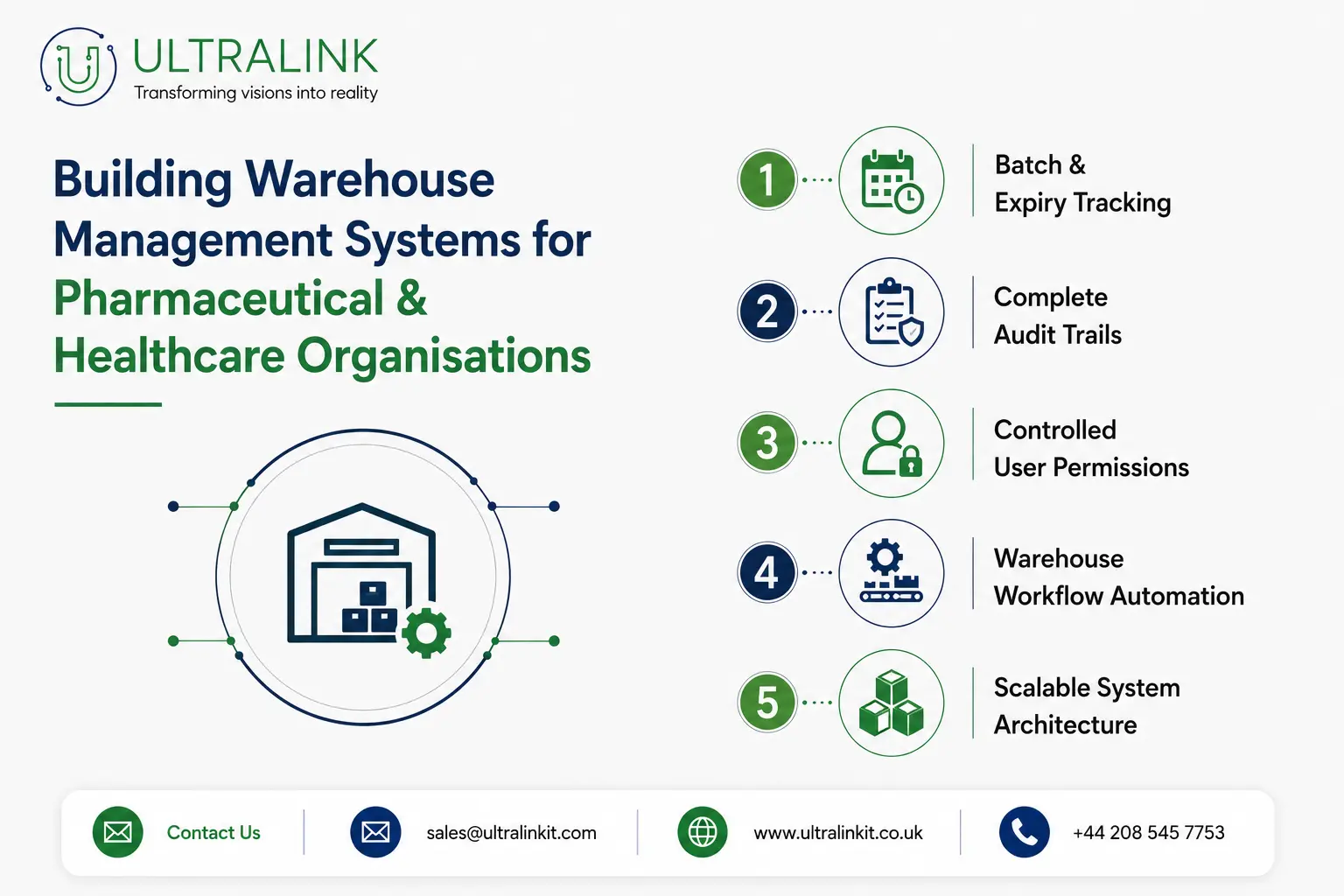
Developing a warehouse solution for a pharmaceutical business is fundamentally different from building one for a general retail or distribution company.
Every warehouse process must support compliance, traceability and operational accuracy while handling products that often have strict storage, handling and regulatory requirements.
This is why Pharmaceutical Warehouse Management requires software that is designed around regulated workflows rather than generic inventory management.
A modern warehouse solution should support:
Batch & Expiry Tracking
Every medicine or healthcare product should be traceable throughout its lifecycle.
Capturing batch numbers, expiry dates and movement history helps reduce product wastage, improve stock rotation and respond quickly if product recalls become necessary.
Complete Audit Trails
Every warehouse transaction should be recorded automatically.
Knowing who performed an action, when it happened and what changes were made creates accountability while simplifying regulatory audits.
Controlled User Permissions
Not every employee requires access to every warehouse function.
Role-based permissions improve security while ensuring sensitive warehouse activities remain appropriately controlled.
Warehouse Workflow Automation
Manual approvals and paper-based processes slow operations and increase the likelihood of errors.
Automating receiving, put-away, replenishment, picking, packing and dispatch creates standardised workflows that improve productivity while maintaining operational consistency.
Scalable System Architecture
Warehouse software should support future business growth.
Whether your organisation expands product ranges, opens additional warehouse locations or increases order volumes, your Warehouse Management System should scale without requiring a complete redevelopment.
Common Warehouse Management System Development Mistakes
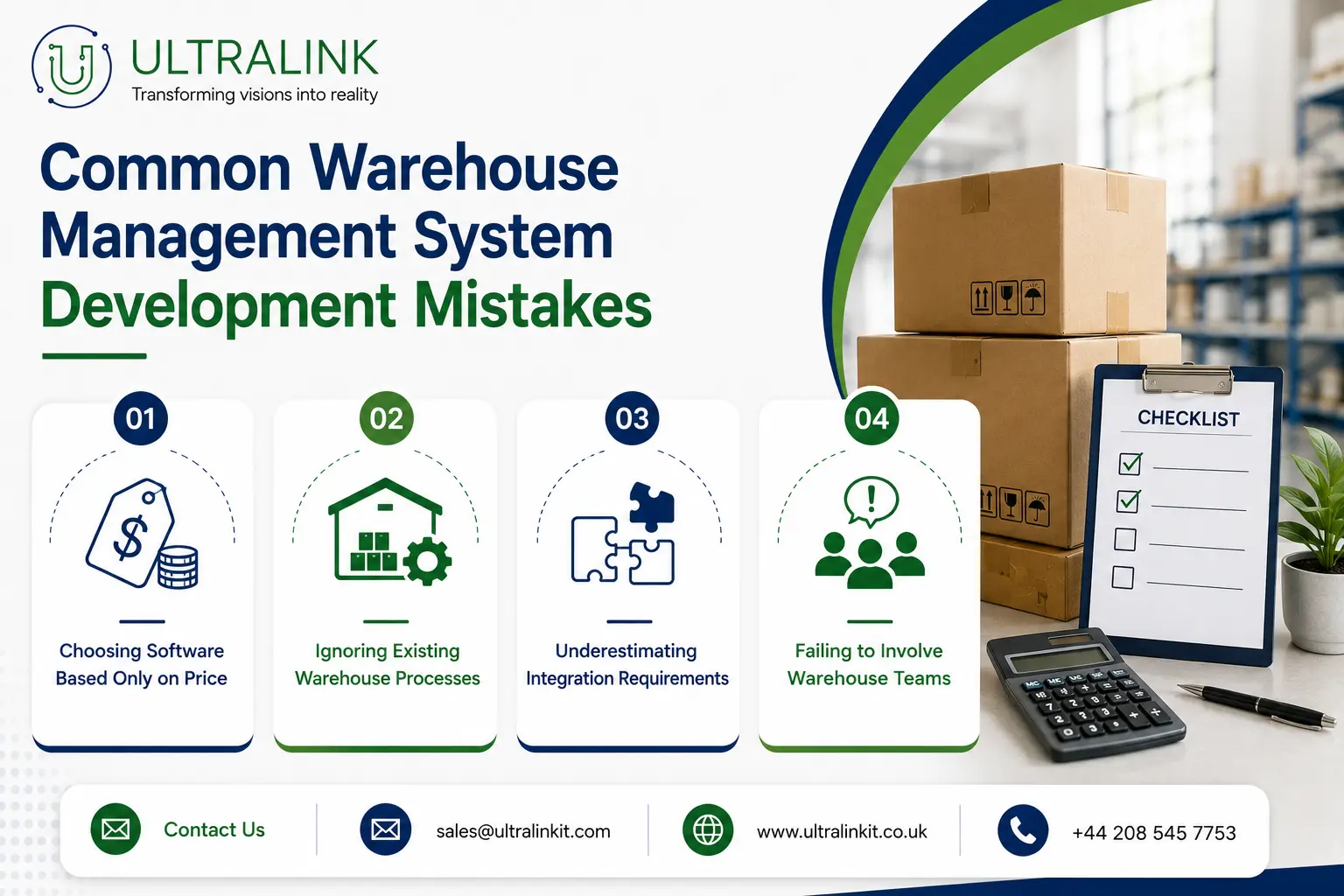
Many Warehouse Management System projects fail not because of technology, but because businesses attempt to digitise inefficient processes rather than improve them.
Some of the most common mistakes include:
Choosing Software Based Only on Price
The lowest-cost solution often becomes the most expensive when additional software, manual workarounds and future upgrades are required.
Instead of focusing purely on initial costs, organisations should evaluate long-term operational value.
Ignoring Existing Warehouse Processes
Every warehouse has developed processes that support its day-to-day operations.
Successful Warehouse Management Software Development begins by understanding these workflows before designing software around them.
Underestimating Integration Requirements
Warehouse operations rarely function in isolation.
If inventory, finance, purchasing and logistics systems cannot communicate effectively, manual work simply shifts from one department to another.
Failing to Involve Warehouse Teams
Warehouse employees understand operational challenges better than anyone.
Including them throughout the planning and testing process significantly improves user adoption and helps identify practical improvements before deployment.
Build or Buy: Which Warehouse Management Approach Is Right?
One of the most common questions businesses ask is whether they should purchase an off-the-shelf Warehouse Management System or invest in a custom-built solution.
There is no universal answer.
The right approach depends on your operational complexity, compliance requirements and long-term business objectives.
| Off-the-Shelf Solution | Custom Warehouse Management System |
|---|---|
| Faster implementation | Built around your warehouse processes |
| Lower upfront investment | Greater flexibility and scalability |
| Standard functionality | Supports industry-specific workflows |
| Limited customisation | Integrates with existing business systems |
| Suitable for simple operations | Ideal for regulated and growing organisations |
For many pharmaceutical and healthcare organisations, custom development becomes the preferred option as operations grow and compliance requirements become more demanding.
Working with an experienced Warehouse Management System Development Company ensures the software reflects your operational workflows instead of forcing your teams to adapt to generic functionality.
Real Result of Warehouse Management System
The true value of Warehouse Management System Development lies in the business outcomes it delivers.
We recently helped a UK pharmaceutical wholesaler replace manual warehouse processes with a fully integrated digital solution, including Microsoft Dynamics 365 Business Central integration, barcode scanning, real-time inventory visibility, batch and expiry tracking, and automated warehouse workflows.
The results included:
- 70% business growth
- 80% faster warehouse operations
- 99% reduction in human errors
Beyond these improvements, the business gained greater inventory accuracy, stronger operational visibility and more efficient day-to-day warehouse management.
Read the full Warehouse Management System Case Study
The Future of Warehouse Management System Development
Warehouse operations will continue to evolve as customer expectations, regulations and technology advance.
Businesses investing in Warehouse Management System Development today should think beyond current operational needs and ensure their platform can support future growth.
Over the coming years, warehouse solutions are expected to include greater use of:
Artificial Intelligence
AI can analyse historical warehouse data to improve demand forecasting, optimise stock replenishment and identify operational bottlenecks before they impact performance.
Predictive Inventory Management
Rather than reacting to stock shortages, businesses will increasingly use predictive analytics to maintain optimal inventory levels while reducing excess stock.
Cloud-Based Warehouse Platforms
Cloud deployment enables warehouse teams to access real-time information from multiple locations while reducing infrastructure costs and simplifying future upgrades.
IoT and Smart Warehousing
Connected devices such as temperature sensors, smart shelving and automated scanning equipment will provide greater visibility across warehouse operations while supporting compliance for sensitive products.
Business Intelligence
Warehouse data will become increasingly valuable for strategic decision-making.
Interactive dashboards and real-time reporting will help management teams monitor performance, identify trends and make faster operational decisions based on accurate information.
Businesses that adopt scalable digital solutions today will be better prepared for tomorrow's operational challenges.
Ready to Modernise Your Warehouse Operations?
If your warehouse still relies on manual processes, disconnected systems or outdated software, now is the time to evaluate whether a custom solution could improve performance.
At Ultralink, we develop Warehouse Management Systems for pharmaceutical wholesalers, healthcare suppliers and distribution businesses across the UK. From planning and software development to ERP integration and long-term support, we help organisations build solutions that deliver measurable operational improvements.
Speak to our team today to discuss your Warehouse Management System Development requirements.
Final Thoughts
Warehouse operations have become one of the most important contributors to business performance.
For pharmaceutical and healthcare organisations, success depends on much more than moving products efficiently. Inventory accuracy, compliance, traceability and operational visibility all play a vital role in maintaining customer confidence and supporting sustainable growth.
Investing in Warehouse Management System Development is not simply about replacing spreadsheets or upgrading software. It is about creating a connected digital environment where people, processes and technology work together to improve productivity, reduce operational risks and support future expansion.
As your organisation grows, your warehouse should be capable of growing with it.
Choosing the right technology partner and developing software around your operational requirements can help create a more efficient, compliant and future-ready warehouse.