
The UK healthcare sector is undergoing rapid digital transformation. Electronic Patient Records (EPRs), telehealth services, cloud-based systems, connected medical devices, and AI-powered healthcare solutions are helping organisations deliver more efficient and accessible care.
However, as healthcare becomes increasingly digital, cyber security risks continue to grow.
For healthcare organisations, cyber security is no longer just an IT concern. A successful cyber attack can disrupt clinical operations, delay treatments, expose sensitive patient information, and undermine public trust. In some cases, the consequences can directly impact patient safety.
As cyber criminals increasingly target healthcare providers, NHS suppliers, private hospitals, clinics, care homes, and pharmaceutical organisations, the question is no longer whether cyber security investment is necessary. The real question is whether healthcare organisations can afford to delay it.
Why Is Healthcare One of the Most Targeted Sectors for Cyber Crime?
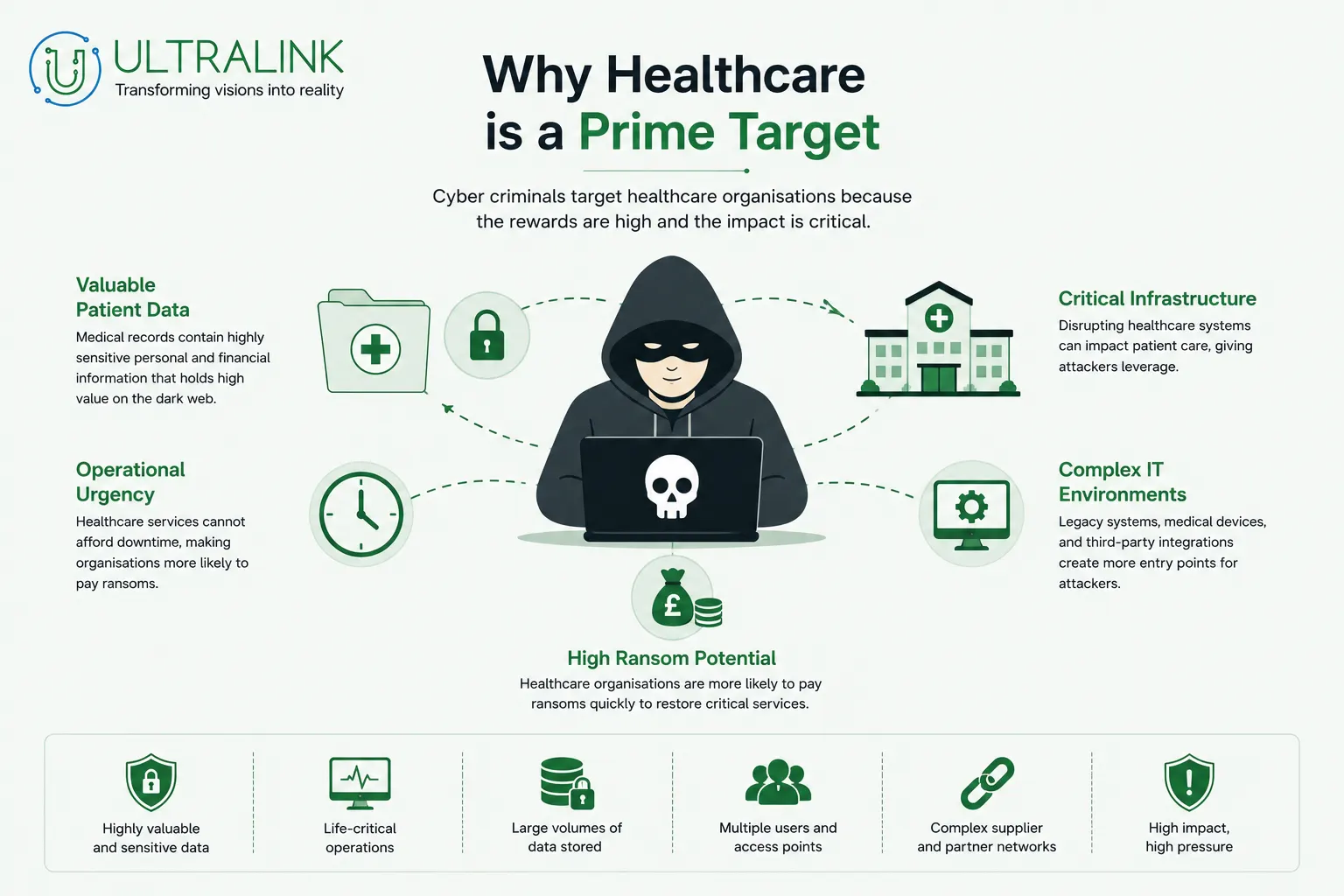
Healthcare organisations store some of the most sensitive information available.
Patient records often contain:
- Personal identification data
- Medical histories
- Diagnostic reports
- Prescription information
- Insurance and payment details
- Staff and supplier information
Unlike financial information, medical data cannot simply be changed after a breach. This makes healthcare records particularly valuable to cyber criminals.
At the same time, healthcare organisations rely heavily on continuous system availability. Clinical staff need immediate access to patient information to make informed decisions, while patients depend on uninterrupted services for treatment and care.
This combination of highly valuable data and operational urgency makes healthcare a prime target for cyber attacks.
According to the UK Government's Cyber Security Breaches Survey 2024, 50% of UK businesses reported experiencing a cyber security breach or attack within the previous 12 months. For medium-sized organisations, the figure rises to 70%, while 74% of large organisations reported experiencing attacks.
Source: https://www.gov.uk/government/statistics/cyber-security-breaches-survey-2024
The Real Impact of a Cyber Attack on Healthcare Services
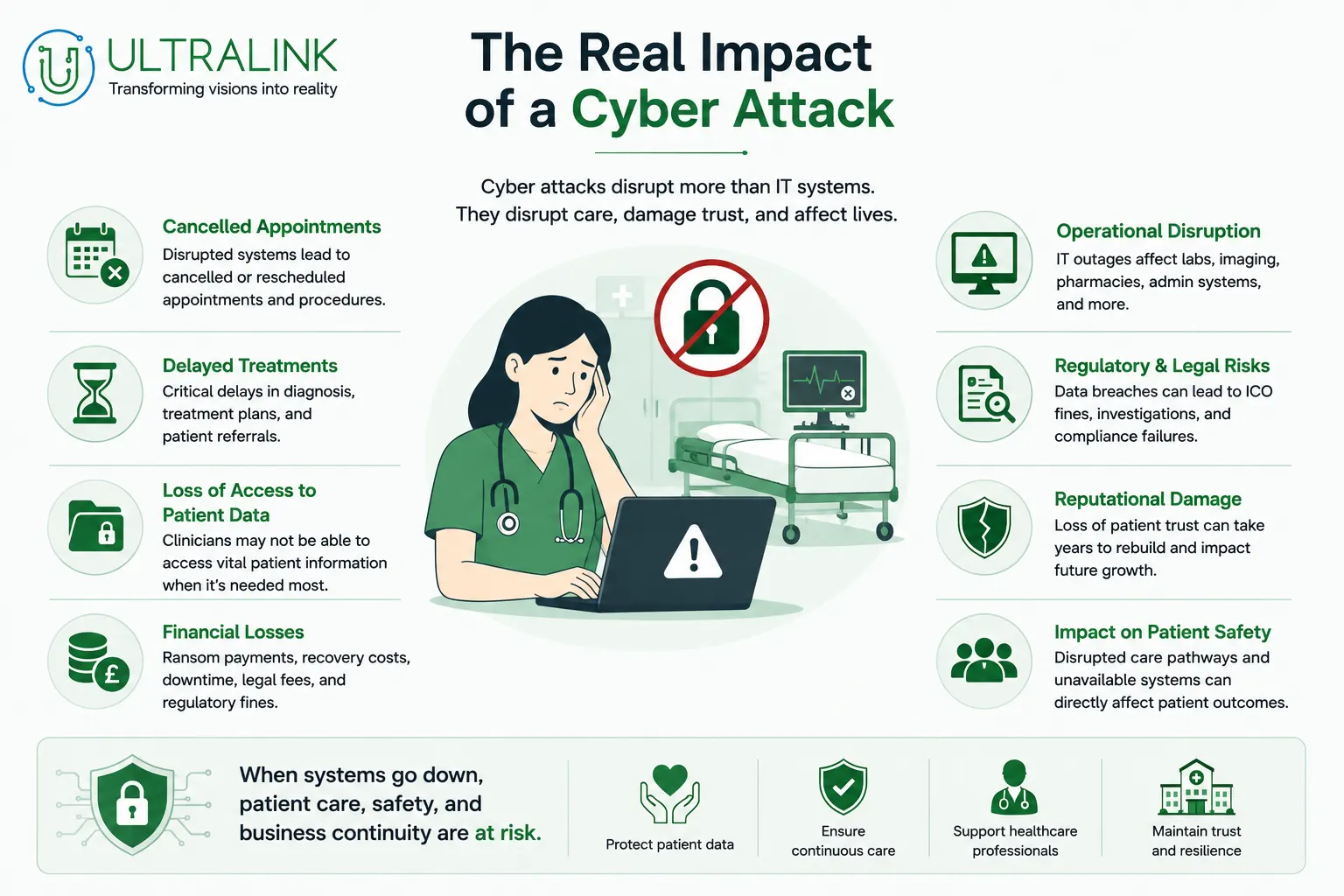
Many organisations still view cyber security as a technical issue. In reality, the consequences extend far beyond IT systems.
A successful cyber attack can lead to:
- Cancelled appointments
- Delayed treatments
- Loss of access to patient records
- Disruption to laboratory services
- Financial losses
- Regulatory investigations
- Reputational damage
- Reduced patient confidence
Most importantly, it can affect patient care.
Healthcare professionals rely on accurate and timely information to make critical decisions. When systems become unavailable, clinicians may face delays accessing patient histories, test results, or treatment plans.
In healthcare environments, even short periods of downtime can create significant operational challenges.
What the Synnovis Cyber Attack Taught the UK Healthcare Sector
One of the most significant healthcare cyber incidents in recent years occurred in 2024 when pathology provider Synnovis suffered a ransomware attack.
The attack disrupted pathology services across several NHS trusts in London and resulted in thousands of cancelled appointments and procedures.
Healthcare organisations are only as secure as the wider digital ecosystem they depend upon.
Even if an organisation has strong internal security controls, vulnerabilities within suppliers, partners, or third-party service providers can create significant risks.
For healthcare leaders, this reinforces the importance of adopting a comprehensive cyber security strategy that includes supply chain risk management.
Source: https://www.england.nhs.uk/synnovis-cyber-incident/
Common Cyber Security Threats Facing UK Healthcare Providers
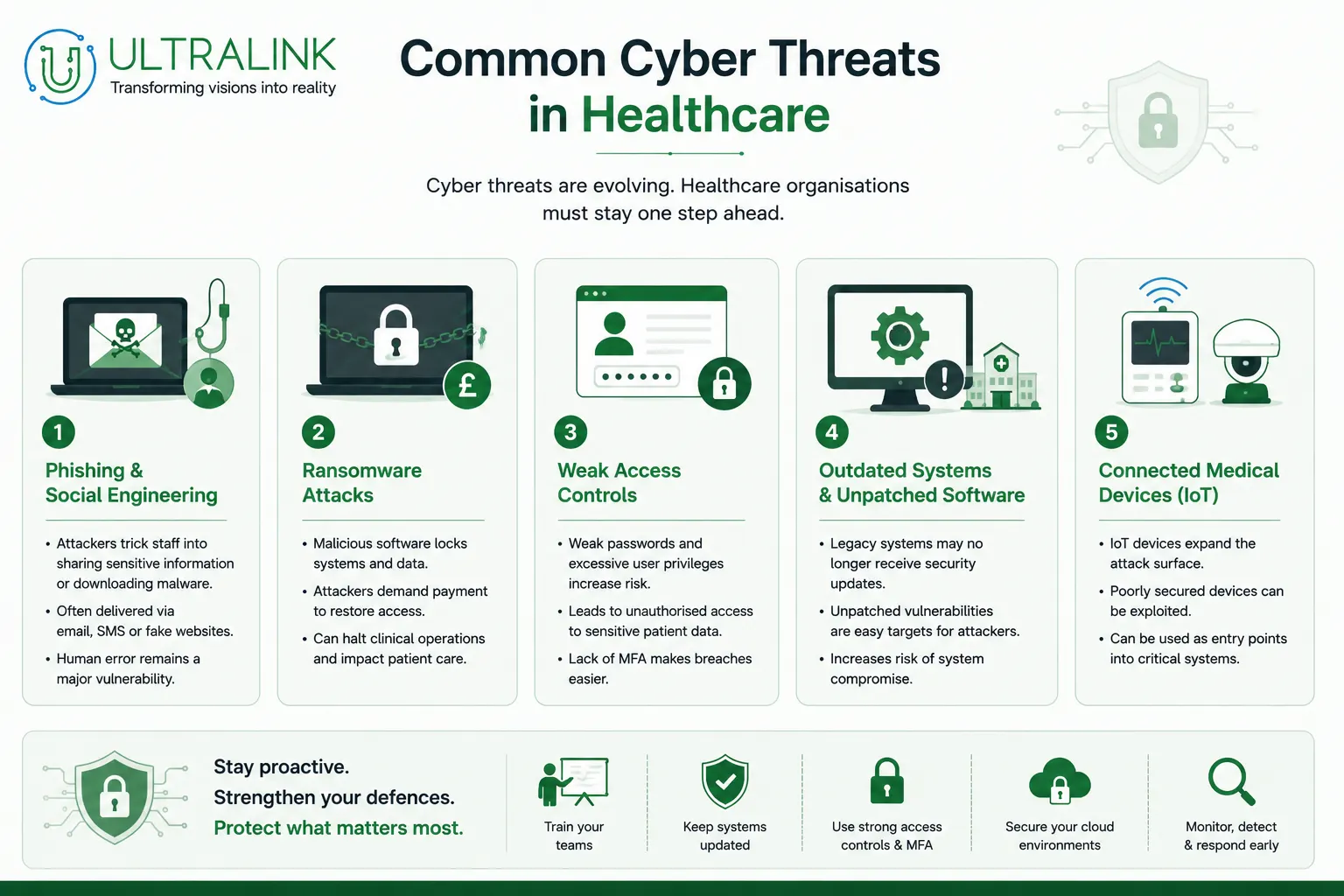
1. Ransomware Attacks
Ransomware remains one of the biggest threats to healthcare organisations.
Attackers encrypt critical systems and demand payment in exchange for restoring access. Healthcare organisations are often targeted because operational downtime can have immediate consequences.
2. Phishing and Social Engineering
Cyber criminals frequently use deceptive emails to trick staff into revealing credentials or downloading malicious software.
Even organisations with advanced technical security controls can become vulnerable if employees are not properly trained to recognise phishing attempts.
3. Weak Access Controls
Poor password practices and excessive user privileges increase the risk of unauthorised access to sensitive patient information.
Implementing Multi-Factor Authentication (MFA) and role-based access controls can significantly reduce this risk.
4. Legacy Systems and Unpatched Software
Many healthcare organisations continue to rely on older technologies that may no longer receive security updates.
Unpatched vulnerabilities often become easy entry points for attackers.
5. Connected Medical Devices
Medical IoT devices such as monitoring systems, imaging equipment, and connected diagnostic tools improve patient care but can also expand the attack surface if not properly secured.
Understanding UK Healthcare Cyber Security Compliance Requirements
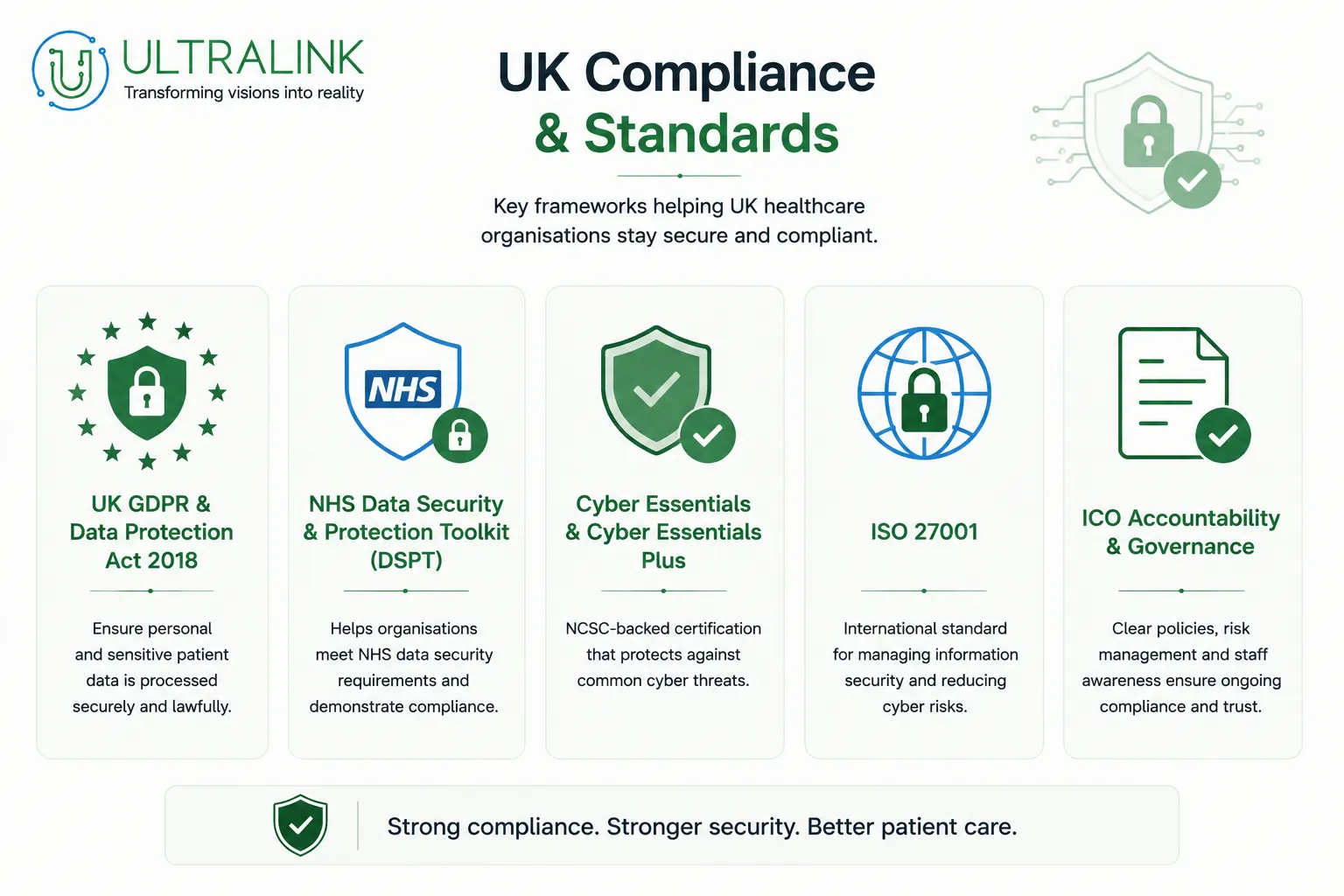
Healthcare organisations operating in the UK must comply with strict data protection and cyber security requirements.
UK GDPR and Data Protection Act 2018
Healthcare organisations must ensure that personal and special category data is processed securely and protected against unauthorised access, loss, or disclosure.
Failure to implement appropriate security measures can result in regulatory action by the Information Commissioner's Office (ICO).
NHS Data Security and Protection Toolkit (DSPT)
Healthcare organisations working with the NHS are expected to meet the standards outlined within the Data Security and Protection Toolkit.
The DSPT helps organisations assess and improve their cyber security posture while demonstrating compliance with NHS expectations.
Cyber Essentials and Cyber Essentials Plus
Backed by the National Cyber Security Centre (NCSC), Cyber Essentials provides a practical framework for protecting organisations against common cyber threats.
Many NHS suppliers and healthcare service providers increasingly view Cyber Essentials certification as a baseline requirement.
ISO 27001
ISO 27001 is an internationally recognised information security management standard that helps organisations establish a structured approach to managing cyber risks.
How Healthcare Organisations Can Improve Cyber Resilience
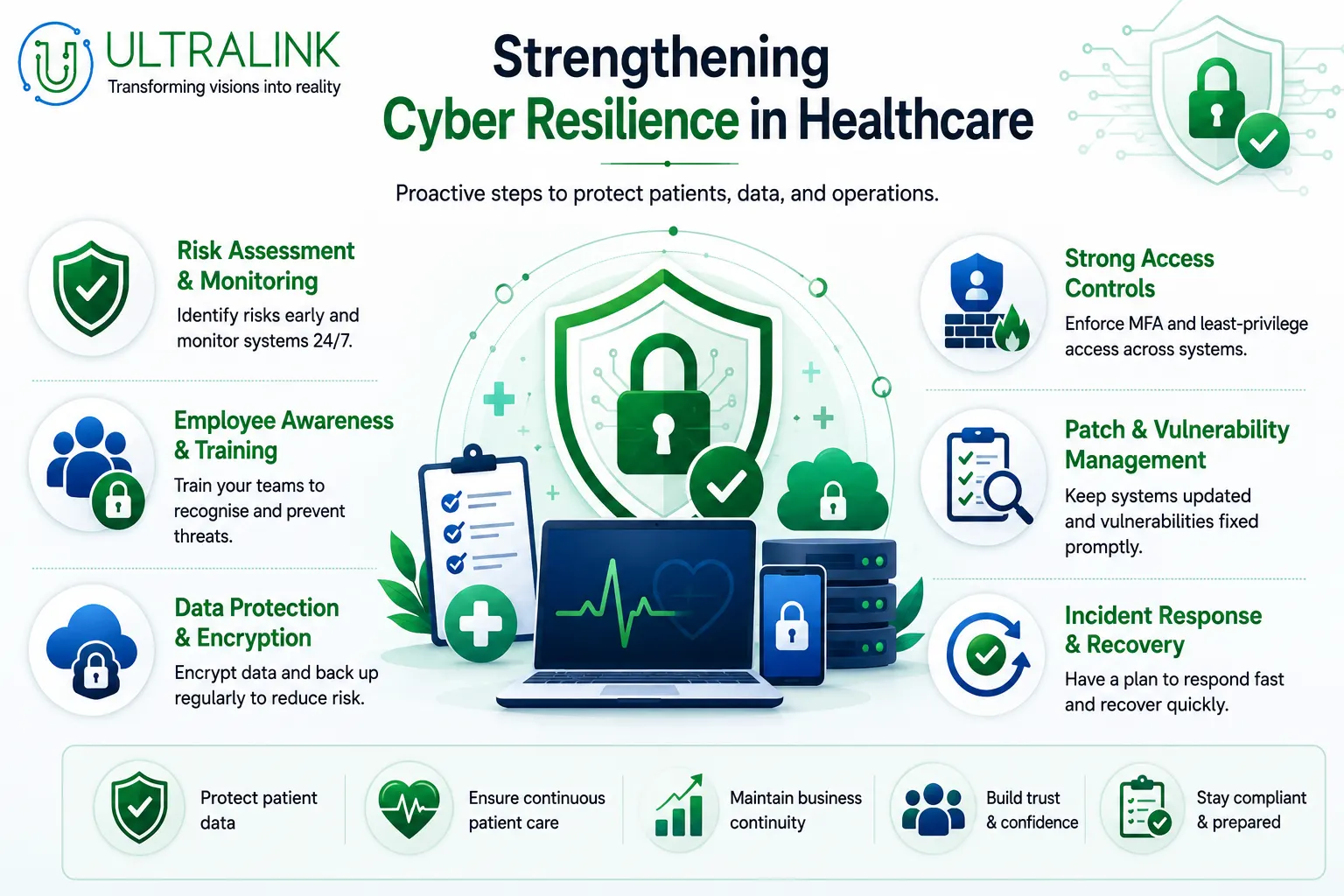
Effective cyber security requires a combination of technology, processes, and people.
Conduct Regular Security Assessments
Regular vulnerability assessments and penetration testing help identify weaknesses before attackers can exploit them.
Strengthen Identity and Access Management
Implementing Multi-Factor Authentication and least-privilege access controls can significantly reduce the risk of unauthorised access.
Invest in Staff Awareness Training
Employees remain one of the strongest lines of defence against cyber threats. Ongoing security awareness programmes help staff recognise phishing attempts and suspicious activities.
Secure Cloud Environments
As healthcare organisations increasingly adopt cloud technologies, securing cloud infrastructure becomes essential.
A properly configured and monitored cloud environment helps protect sensitive patient data while supporting operational flexibility.
Develop an Incident Response Plan
Every healthcare organisation should have a clearly defined incident response plan that outlines how cyber incidents will be detected, managed, communicated, and recovered from.
Monitor Systems Continuously
Continuous monitoring helps organisations identify unusual activity early and respond before incidents escalate.
Why Cyber Security Is Ultimately About Patient Trust
Patients trust healthcare providers with some of their most sensitive information.
They expect healthcare organisations not only to deliver quality care but also to protect their personal data.
A strong cyber security strategy demonstrates:
- Commitment to patient safety
- Operational resilience
- Regulatory compliance
- Responsible innovation
- Long-term organisational sustainability
In an increasingly digital healthcare environment, trust and security are closely connected.
How Ultralink IT Supports Healthcare Organisations
Healthcare organisations require cyber security solutions that balance protection, compliance, operational efficiency, and patient care.
At Ultralink IT, we help organisations strengthen their cyber resilience through comprehensive Cyber Security Services designed to identify vulnerabilities, reduce risk, and improve operational security.
Healthcare providers can also benefit from our expertise in:
- Secure Cloud Services
- Managed IT Services
- IT Consulting
- Digital Transformation Solutions
- Custom Healthcare Software Development
By taking a proactive approach to cyber security, healthcare organisations can protect sensitive data, maintain service continuity, and build greater trust with patients and stakeholders.
Conclusion
The future of healthcare will continue to be shaped by digital innovation.
From AI-powered diagnostics to connected care platforms, technology is helping organisations deliver better patient outcomes than ever before.
However, every digital advancement brings new cyber security responsibilities.
Cyber security is no longer simply about protecting systems and networks. It is about safeguarding patient information, supporting healthcare professionals, maintaining operational continuity, and protecting the trust that sits at the heart of healthcare.
For UK healthcare organisations, investing in cyber security today is an investment in safer, more resilient patient care tomorrow.